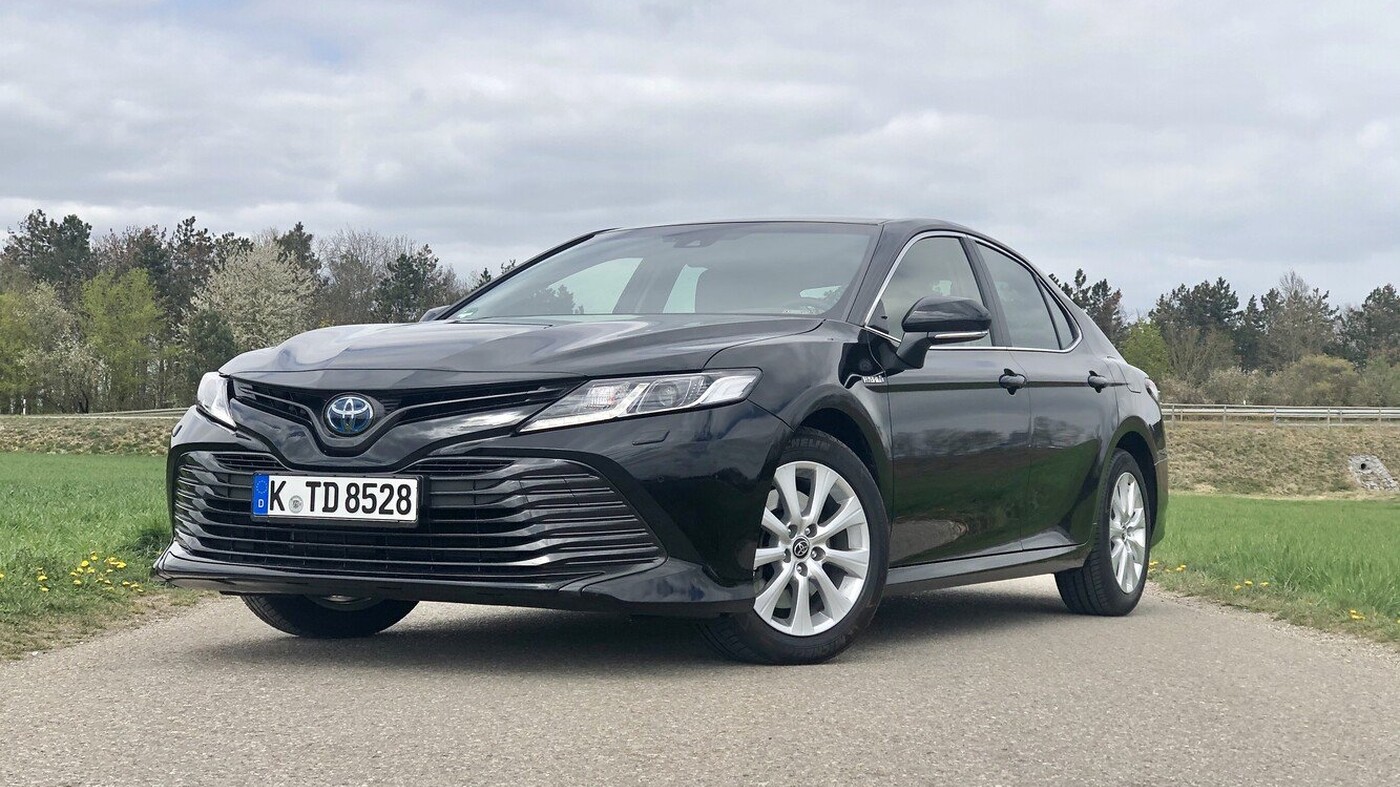
Einführung: Entwicklung und Marktposition des Toyota Camry
Der Toyota Camry gehört seit über zwei Jahrzehnten zu den meistverkauften Limousinen in Amerika und überzeugt in der umkämpften Mittelklasse verlässlich mit hoher Zuverlässigkeit. Was als nüchternes Familienauto begann, hat sich zu einem ausgewogenen Fahrzeug entwickelt, das Effizienz, Komfort und Preis-Leistungs-Verhältnis verbindet und mit jeder Generation mehr Stil und Technik bietet.
Toyota hat den Camry von seinem Ruf als „langweilig, aber zuverlässig“ zu einem deutlich überzeugenderen Gesamtpaket weiterentwickelt. Die aktuelle Generation, 2018 eingeführt und 2021 überarbeitet, bietet ein schärferes Design, bessere Fahrdynamik und moderne Sicherheitsfunktionen. Das hat geholfen, die starke Marktposition trotz des anhaltenden Trends zu SUVs und Crossovers zu behaupten.
Laut Verkaufsdaten der Branche verkauft sich der Camry weiterhin besser als die meisten Konkurrenten im Segment der Mittelklasse-Limousinen. Seine Relevanz verdankt er Toyotas Qualitätsruf und gezielten Modellpflegen, die mit den Erwartungen der Kunden Schritt halten. Während Marken wie Honda, Mazda und Hyundai mit starken Angeboten den Wettbewerb verschärft haben, sichert der ausgewogene Ansatz des Camry bei den wichtigsten Kundenbedürfnissen seine Marktposition.
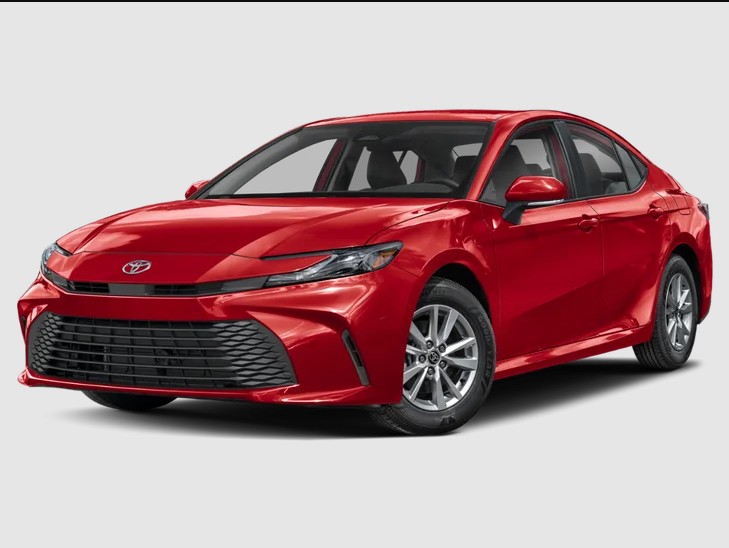
Wichtige Daten auf einen Blick
Der aktuelle Toyota Camry bietet mehrere Antriebsoptionen über verschiedene Ausstattungslinien hinweg. Die meisten Modelle haben einen 2,5-Liter-Vierzylinder mit 202 bis 206 PS, je nach Ausstattung leicht unterschiedlich, kombiniert mit einer 8-Gang-Automatik. Die Hybridvarianten verbinden einen ähnlichen 2,5-Liter-Motor mit Elektromotoren zu einer Systemleistung von 208 PS und nutzen ein stufenloses Getriebe.
Der Basis-LE startet bei etwa 26.320 $, während die Topausstattung XSE vor Optionen knapp 32.000 $ erreicht. Die Hybridpalette beginnt mit dem sparsamen Hybrid LE, geschätzt 51 MPG Stadt/53 MPG Autobahn, bei rund 28.355 $ und bietet im Vergleich zu konventionellen Modellen ein sehr gutes Preis-Leistungs-Verhältnis.
Ausstattung | Motor | Leistung | Geschätzte MPG (Stadt/Autobahn) | MSRP ab |
LE | 2,5L 4-Zylinder | 203 | 28/39 | $26,320 |
SE | 2,5L 4-Zylinder | 203 | 28/39 | $27,860 |
XLE | 2,5L 4-Zylinder | 202 | 27/38 | $30,870 |
XSE | 2,5L 4-Zylinder | 206 | 28/38 | $31,920 |
Hybrid LE | 2,5L 4-Zylinder + Elektro | 208 kombiniert | 51/53 | $28,355 |
Hybrid XLE | 2,5L 4-Zylinder + Elektro | 208 kombiniert | 44/47 | $33,345 |
Die größten Stärken des Camry
Der Toyota Camry behauptet seine Bestsellerposition durch praktische Vorteile, die zentrale Kundenwünsche erfüllen. Während Konkurrenten in einzelnen Bereichen glänzen, ergibt die Kombination aus Zuverlässigkeit, Effizienz und Wertstabilität beim Camry ein sehr überzeugendes Gesamtpaket für Käufer, die eine verlässliche Mittelklasse-Limousine suchen.
Legendäre Zuverlässigkeit und Lebensdauer des Toyota Camry
Der Ruf des Camry für Langlebigkeit ist nicht nur Marketing — er wird durch Daten gestützt. Laut RepairPal erreicht der Toyota Camry eine Zuverlässigkeitsbewertung von 4,0 von 5,0 und liegt damit auf Platz 3 von 24 Mittelklassewagen. Das bedeutet weniger und weniger schwere Reparaturen als im Segmentdurchschnitt.
Bei richtiger Wartung erreichen Camry-Modelle regelmäßig 200.000 bis 300.000 Meilen; manche Besitzer berichten sogar von höheren Laufleistungen. Diese Haltbarkeit beruht auf Toyotas konservativem Engineering, das bewährte Technik über hochmoderne, aber unerprobte Innovationen stellt. Der 2,5-Liter-Vierzylinder nutzt beispielsweise ein erprobtes Konzept, das über mehrere Generationen verfeinert statt vollständig ersetzt wurde.
Auch Toyotas Fertigungsprozesse tragen wesentlich dazu bei. Das Produktionssystem betont Qualitätskontrolle in jeder Phase und reduziert Fehler, die später im Fahrzeugleben auftreten könnten. Die schrittweise Weiterentwicklung statt radikaler Änderungen sorgt dafür, dass die meisten Komponenten gründlich erprobt sind, bevor sie zum Kunden kommen.
Diese Zuverlässigkeit senkt direkt die Besitzkosten. Wenn große Baugruppen wie Getriebe und Motoren länger halten, sinken die Gesamtkosten deutlich, selbst wenn der Anschaffungspreis etwas höher liegt als bei manchen Wettbewerbern.
Beeindruckende Kraftstoffeffizienz in allen Ausstattungen
Der Camry überzeugt über die gesamte Modellpalette mit hoher Effizienz. Der Hybrid LE erreicht außergewöhnliche EPA-Werte von 51 MPG Stadt/53 MPG Autobahn/52 MPG kombiniert. Damit konkurriert er mit spezialisierten Hybriden wie dem Prius, bietet aber mehr Innenraum und Komfort.
Auch die konventionellen Benzinmodelle schneiden gut ab: Der 2,5-Liter-Vierzylinder schafft in bestimmten Konfigurationen bis zu 28 MPG Stadt/39 MPG Autobahn. Diese Effizienz kommt ohne große Leistungseinbußen; der Standardmotor bietet für den Alltag ausreichende Beschleunigung.
Besondere Aufmerksamkeit verdient das Hybridsystem, eines der ausgereiftesten seiner Klasse. Toyotas jahrzehntelange Hybrid-Erfahrung zeigt sich im nahtlosen Wechsel zwischen Elektro- und Benzinantrieb. Anders als manche Systeme von Wettbewerbern, die unnatürlich oder zögerlich wirken, arbeitet der Antrieb des Camry Hybrid nahezu unbemerkt.
- LE/SE (2.5L): 28 Stadt/39 Autobahn/32 kombiniert MPG
- XLE/XSE (2.5L): 27-28 Stadt/38 Autobahn/31-32 kombiniert MPG
- Hybrid LE: 51 Stadt/53 Autobahn/52 kombiniert MPG
- Hybrid SE/XLE/XSE: 44 Stadt/47 Autobahn/46 kombiniert MPG
Praxistests bestätigen diese Werte meist, und viele Besitzer melden Verbräuche nahe an den EPA-Schätzungen. Diese Berechenbarkeit ist für preisbewusste Käufer wertvoll, die Kraftstoffkosten zuverlässig planen müssen.
Hoher Fahrkomfort und überzeugender Antrieb
Der Camry findet eine starke Balance aus Komfort und Kontrolle. Seine Federung schluckt Straßenunebenheiten, ohne entkoppelt zu wirken — ein klarer Fortschritt gegenüber früheren Generationen, die zu weich und schaukelig wirken konnten. Die aktuelle Plattform bietet bessere Karosseriekontrolle in Kurven und bewahrt zugleich den komfortablen Charakter, den Toyota-Käufer erwarten.
Toyotas Hybridsystem sticht durch seine Kultiviertheit hervor. Während manche Hybridantriebe von Wettbewerbern unnatürlich wirken oder spürbare Übergänge zwischen Energiequellen zeigen, liefert der Camry Hybrid seine Leistung sehr gleichmäßig. Elektro- und Benzinantrieb greifen fast unmerklich ineinander, sodass das Fahrerlebnis natürlich statt techniklastig wirkt.
Der konventionelle 2,5-Liter-Motor bietet für die meisten Situationen genug Leistung. Er ist zwar nicht der stärkste seiner Klasse, doch seine lineare Kraftentfaltung und die gut abgestimmte 8-Gang-Automatik sorgen für ein berechenbares, stressfreies Fahren. Der Antrieb reagiert zügig auf Gasbefehle, ohne das Zögern, das manche Turbokonkurrenten bei niedrigen Drehzahlen zeigen.
Verbesserungen bei der Geräuschdämmung haben frühere Kritik an Straßen- und Motorgeräuschen entschärft. Der aktuelle Camry ist zwar nicht so leise wie ein Luxusauto, bleibt bei Autobahntempo aber angenehm ruhig, sodass Gespräche oder Musik ohne unnötig hohe Lautstärke möglich sind.
Überzeugendes Preis-Leistungs-Verhältnis
Der Wert des Camry geht über den MSRP hinaus und umfasst die gesamte Besitzzeit. Ab 26.320 $ für den LE bietet der Camry mehr Serienausstattung als viele Konkurrenten zu ähnlichen Preisen. Schon das Einstiegsmodell hat Toyota Safety Sense 3.0 mit adaptiver Geschwindigkeitsregelung, Spurverlassenswarnung mit Lenkunterstützung und automatischem Fernlicht.
Höhere Ausstattungen ergänzen Funktionen wie Blind Spot Monitor (BSM) mit Querverkehrswarnung hinten, die die Sicherheit erhöhen, ohne teure Pakete zu erfordern. XLE und XSE bieten Sport-SofTex-Bezüge, die Optik und Haptik von Leder vermitteln, aber weniger kosten- und pflegeintensiv sind.
Auch beim Wertverlust liegt der Camry regelmäßig vorn. Branchendaten zufolge behält er nach fünf Jahren typischerweise etwa 54 % seines Werts — mehrere Prozentpunkte mehr als viele Wettbewerber. Das bedeutet beim Wiederverkauf oft Tausende Dollar Vorteil und ist ein wichtiger Faktor bei den Gesamtkosten.
Kostenfaktor über 5 Jahre | Toyota Camry | Segmentdurchschnitt |
Wertverlust | 46% (behält 54% des Werts) | 51% (behält 49% des Werts) |
Wartung | $4,203 | $5,041 |
Reparaturen | $1,352 | $1,749 |
Kraftstoff | $5,694 (Nicht-Hybrid) | $6,212 |
Moderne Sicherheitsfunktionen und starke Bewertungen
Sicherheit ist eines der stärksten Argumente für den Camry. Die aktuelle Generation erhielt vom Insurance Institute for Highway Safety (IIHS) die Bewertung Top Safety Pick+ und von der National Highway Traffic Safety Administration (NHTSA) eine 5-Star Overall Safety Rating — die jeweils höchsten Bewertungen.
Toyota Safety Sense™ 3.0 ist in allen Ausstattungen serienmäßig und umfasst mehrere moderne Fahrerassistenzsysteme, die bei Wettbewerbern bis vor Kurzem optional oder gar nicht verfügbar waren:
- Pre-Collision System mit Fußgängererkennung
- Dynamic Radar Cruise Control
- Lane Departure Alert mit Steering Assist
- Lane Tracing Assist
- Automatic High Beams
- Road Sign Assist
Die Sicherheitssysteme des Camry funktionieren auch im Alltag zuverlässig. Die automatische Notbremsung reagiert schnell auf Hindernisse, während die Spurhaltefunktionen ein natürliches Lenkgefühl bewahren. Im Gegensatz zu manchen Konkurrenzsystemen, die aufdringlich oder inkonsequent wirken können, arbeiten die Camry-Systeme angenehm berechenbar.
Auch die strukturelle Sicherheit verdient Erwähnung. Die Plattform des Camry nutzt hochfesten Stahl in kritischen Bereichen und Knautschzonen, die Crashenergie vom Passagierraum weg aufnehmen und ableiten. Diese passiven Sicherheitsmerkmale ergänzen die aktiven Systeme zu einem umfassenden Schutz.
Wichtige Nachteile, die man beachten sollte
Trotz vieler Stärken hat der Toyota Camry einige Einschränkungen, die Käufer kennen sollten. Für viele werden sie die Vorteile nicht überwiegen, sie zeigen aber Bereiche, in denen Wettbewerber teils bessere Lösungen bieten oder der Camry Kompromisse zugunsten seiner Kernstärken eingeht.
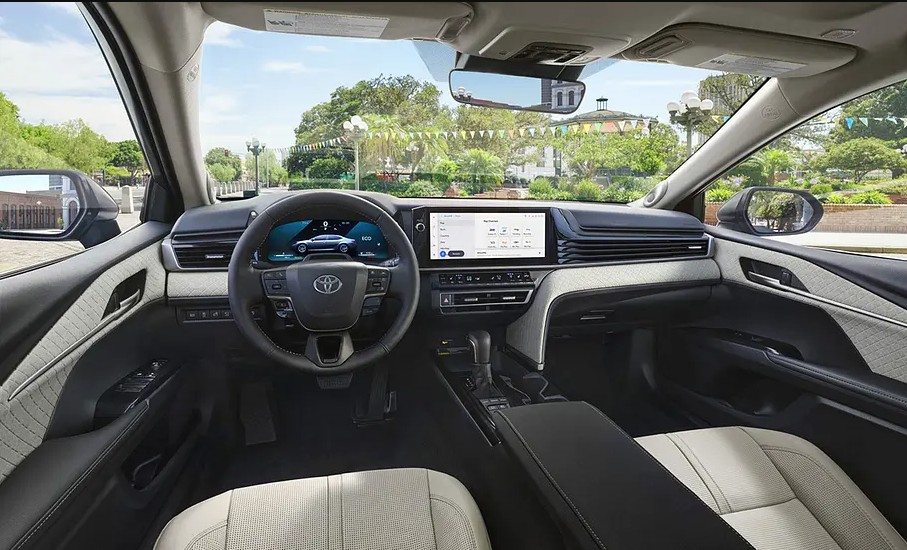
Innenraumgeräusche und Materialqualität im Toyota Camry
Obwohl der Camry gegenüber früheren Generationen deutlich besser geworden ist, dringen mehr Abroll- und Windgeräusche in den Innenraum als bei Klassenbesten wie dem Honda Accord. Bei Autobahntempo über 65 mph entstehen rund um A-Säulen und Spiegel hörbare Windgeräusche, die eine höhere Audiolautstärke nötig machen.
Die Innenraummaterialien sind robust, wirken aber weniger hochwertig als bei einigen Konkurrenten. Das Armaturenbrett nutzt überwiegend harte Kunststoffe in Bereichen, in denen Accord und Mazda6 weichere Oberflächen bieten. Untere Türverkleidungen und Seiten der Mittelkonsole klingen beim Antippen hohl.
Klavierlackelemente, besonders um Mittelkonsole und Infotainment-Bedienung, zeigen schnell Fingerabdrücke und Staub und zerkratzen mit der Zeit leicht. Diese Materialwahl wirkt anfangs modern und attraktiv, ist langfristig aber weniger praktisch.
Die serienmäßigen Stoffsitze im LE wirken haltbar, fühlen sich aber etwas grober an als Hondas Materialien in vergleichbaren Ausstattungen. SofTex-Kunstleder in höheren Trims bietet eine bessere Haptik, kann im Sommer ohne konsequente Klimatisierung jedoch heiß und klebrig werden.
Nicht alle Käufer stören sich daran. Wer jedoch einen sehr leisen, hochwertig wirkenden Innenraum priorisiert, könnte die kultiviertere Kabine des Honda Accord bei ähnlichem Preis als lohnender empfinden.
Probleme bei der Verarbeitungsqualität
Trotz Toyotas Qualitätsruf zeigen einige neuere Camry-Modelle gewisse Unregelmäßigkeiten. Spaltmaße können für diese Preisklasse stärker variieren als erwartet, besonders an Kofferraum und hinteren Seitenteilen. Manche Besitzer berichten von leichten Fehlstellungen zwischen Karosserieteilen, die zwar die Funktion nicht beeinträchtigen, aber den Premiumeindruck mindern.
Im Innenraum treten gelegentlich Knarz- und Klappergeräusche aus Armaturenbrett und Türverkleidungen auf. Diese Probleme scheinen bei den sportlicheren SE- und XSE-Versionen häufiger zu sein, möglicherweise weil die straffere Federung mehr Straßeneinflüsse in die Karosserie leitet.
Die Integration des Infotainment-Bildschirms ist funktional, zeigt aber teils Ausrichtungsprobleme zur umliegenden Armaturenbrettverkleidung. Dadurch entstehen ungleichmäßige Spalte, die Staub sammeln und die Finishqualität mindern. Einige Touch-Bedienelemente rund um das Infotainmentsystem fühlen sich weniger präzise an als bei Konkurrenzsystemen.
Diese Verarbeitungsaspekte beeinträchtigen selten die Zuverlässigkeit, können aber Käufer enttäuschen, die Toyotas legendäre Detailgenauigkeit im gesamten Fahrzeug erwarten.
Leistungsgrenzen und Fahrerlebnis
Bei der Fahrdynamik macht der Camry klare Kompromisse gegenüber engagierteren Konkurrenten wie Mazda 6 und Honda Accord. Selbst der sportlichste Camry TRD ist zwar straffer und direkter als die Standardmodelle, bietet aber nicht das Lenkgefühl und die Chassiskommunikation, die Fahrenthusiasten suchen.
Die Lenkung ist präzise, liefert aber nur begrenzte Rückmeldung über Straßenbeschaffenheit und Grip. Die Abstimmung priorisiert einfache Bedienung statt Fahrereinbindung, was bei dynamischer Fahrt etwas künstlich wirkt. Für den Alltag ist das angenehm, auf kurvigen Straßen enttäuscht es gegenüber Modellen wie dem Mazda6.
Das Bremspedalgefühl bleibt bei allen Camry-Modellen eine Schwäche. Der erste Pedalweg kann weich wirken, und die Bremskraft baut sich nicht linear auf. Daran gewöhnt man sich, doch das vertrauenerweckende Bremsgefühl des Honda Accord erreicht der Camry nicht.
Die Beschleunigung ist ausreichend, bleibt aber hinter Turbokonkurrenten zurück. Der Standard-2,5-Liter benötigt für 0-60 mph etwa 7,5 Sekunden, während der Honda Accord 2.0T rund 5,5 Sekunden und selbst der Accord 1.5T etwa 7,1 Sekunden schafft. Beim Überholen auf der Autobahn verlangt der Saugmotor des Camry mehr Gaseinsatz als turbogeladene Alternativen.
Design- und Stilfragen
Der aktuelle Camry ist Toyotas mutigster Designansatz für dieses Modell, löst aber weiterhin gemischte Reaktionen aus. Die aggressive Front, besonders bei SE und XSE, kombiniert einen großen Kühlergrill mit scharfen Linien, was manchen im Vergleich zu klareren Konkurrenzdesigns überzeichnet erscheint.
Das Interieur stellt Funktion über Form. Das Armaturenbrett ist sehr bedienfreundlich, besitzt aber nicht die geschlossene Designsprache von Fahrzeugen wie dem Mazda6. Die asymmetrische Mittelkonsole ist ergonomisch gelungen, wirkt optisch jedoch etwas uneinheitlich.
Der Infotainment-Bildschirm erfüllt seinen Zweck, wirkt aber eher aufgesetzt als in das Armaturenbrett integriert. Das vereinfacht die Produktion, sieht aber weniger hochwertig aus als voll integrierte Displays bei Wettbewerbern.
Die Rundumsicht leidet unter relativ breiten A-Säulen und einer hohen Gürtellinie, wodurch größere tote Winkel entstehen als bei früheren Camry-Generationen. Die serienmäßige Rückfahrkamera hilft nach hinten, doch seitlich und nach vorn verlangt die Sicht mehr Aufmerksamkeit als in designs mit größerer Glasfläche.
Einschränkungen bei Kofferraum und Stauraum
Mit 15,1 Kubikfuß Kofferraumvolumen liegt der Camry hinter den 16,7 Kubikfuß des Honda Accord — ein deutlicher Unterschied beim Laden größerer Gegenstände. Die Öffnung ist ordentlich groß, die Ladekante aber höher als ideal für schwere Objekte.
Hybridmodelle verlieren wegen der Batterieposition zusätzlichen Kofferraum und kommen auf 14,1 Kubikfuß. Das ist bei Hybrid-Limousinen zu erwarten, bleibt aber für Käufer relevant, die häufig größere Ladung transportieren.
Die Rücksitze lassen sich im Verhältnis 60/40 umklappen, doch die Durchladeöffnung ist schmaler als bei manchen Konkurrenten. Dadurch passen weniger große Gegenstände vom Kofferraum in den Innenraum. Zum Umklappen müssen Hebel im Kofferraum betätigt werden statt bequemere Entriegelungen aus der Kabine.
Auch die Ablagen im Innenraum sind nur ausreichend: Türfächer und Mittelkonsole bieten brauchbaren, aber nicht üppigen Platz für persönliche Dinge.
Vergleich der Toyota Camry Ausstattungen
Die Camry-Palette umfasst sechs zentrale Ausstattungslinien mit konventionellem und Hybridantrieb, zugeschnitten auf unterschiedliche Vorlieben und Budgets. Die Struktur folgt Toyotas bekannter Hierarchie vom wertorientierten LE bis zu den gehobenen XLE- und sportlichen SE/XSE-Varianten.
Jede Stufe ergänzt Funktionen und Komfort, ohne den Kerncharakter des Camry zu verändern. Toyota positioniert diese Ausstattungen gezielt, um im Mittelklasse-Limousinensegment verschiedene Preisbereiche abzudecken und jeweils konkurrenzfähige Ausstattung zu bieten.
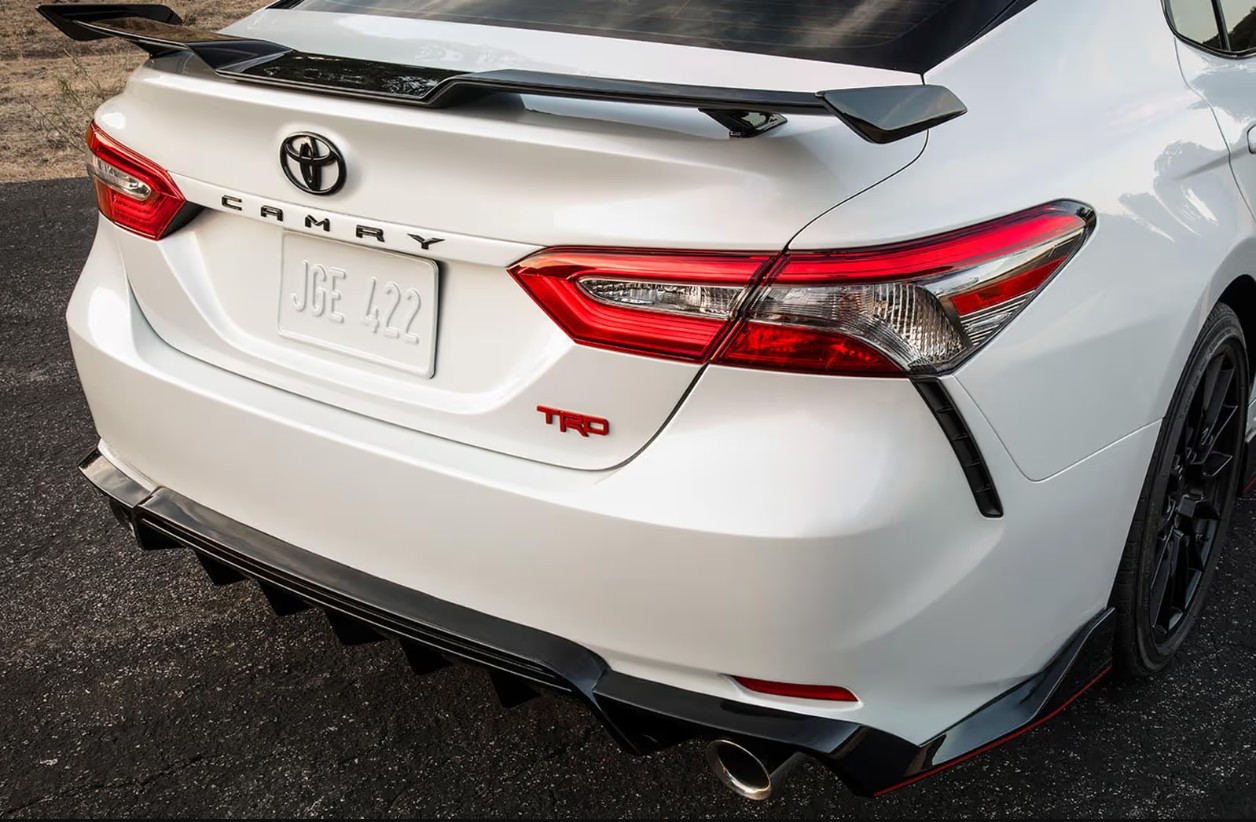
Welches Camry Modell bietet den besten Gegenwert?
Der Basis-LE bietet außergewöhnlichen Wert für Käufer, die zuverlässige Mobilität mit modernen Sicherheitsfunktionen suchen. Ab etwa 26.320 $ umfasst er Toyota Safety Sense 3.0, einen 7-Zoll-Touchscreen mit Apple CarPlay- und Android Auto-Kompatibilität sowie LED-Scheinwerfer. Stoffsitze und einfache Innenraumoberflächen erfüllen ihren Zweck ohne teuren Schnickschnack.
Wer eine sportlichere Optik ohne großen Aufpreis sucht, erhält mit dem SE sportlich abgestimmtes Fahrwerk, 18-Zoll-Leichtmetallräder und Sportsitze mit besserem Stoff für rund 1.500 $ mehr als beim LE. Allein die verbesserten Sitze rechtfertigen für Vielfahrer einen großen Teil des Aufpreises.
Der Hybrid LE ist vielleicht das stärkste Wertangebot der gesamten Baureihe. Für etwa 2.000 $ mehr als der normale LE bietet er geschätzte 52 MPG kombiniert — ein Wert, der den Aufpreis bei vielen Fahrern durch Kraftstoffersparnis innerhalb von drei Jahren ausgleichen kann. Außerdem läuft das Hybridsystem sanfter und beschleunigt etwas besser als der Standardantrieb.
XLE und XSE ergänzen lederähnliche SofTex-Sitze, Sitzheizung vorn, Zweizonen-Klimaautomatik und einen 8-Zoll-Touchscreen. Diese Funktionen erhöhen den Komfort, doch der rund 4.000 $ höhere Preis gegenüber vergleichbaren LE/SE-Versionen ist ein großer Schritt, der mehr Luxus als zusätzliche Funktionalität bringt.
Ausstattung | Am besten für | Wichtige Wertmerkmale | Überspringen, wenn Sie... |
LE | Preisbewusste Käufer, die Zuverlässigkeit suchen | Toyota Safety Sense 3.0, LED-Scheinwerfer | sportlichere Optik oder Premiumfunktionen wollen |
SE | Fahrer, die sportlichere Optik wünschen | Sportfahrwerk, bessere Sitze, 18" Räder | Komfort über sportlichen Look stellen |
Hybrid LE | Effizienzorientierte Fahrer mit längeren Pendelstrecken | 51/53 MPG, niedrigere Langzeitkosten | zu wenig fahren, um von Hybrid-Effizienz zu profitieren |
XLE/XSE | Komfortorientierte Käufer mit Wunsch nach fast luxuriöser Ausstattung | SofTex-Sitze, Sitzheizung, größeres Infotainment | einen Aufpreis von $4,000+ für Luxusfunktionen nicht rechtfertigen können |
Langfristige Besitzerfahrung
Der Ruf des Toyota Camry beruht nicht nur auf Anfangsqualität, sondern auf der Erfahrung über viele Jahre. Daten aus Besitzerumfragen und Zuverlässigkeitsstudien zeigen regelmäßig, dass der Camry bei langfristiger Zufriedenheit überzeugt, mit weniger unerwarteten Problemen und niedrigeren Betriebskosten als die meisten Wettbewerber.
Neue Camry-Käufer profitieren von ToyotaCare mit planmäßiger Wartung für zwei Jahre oder 25.000 Meilen sowie 24-Stunden-Pannenhilfe für zwei Jahre, unabhängig von der Laufleistung. Das senkt frühe Besitzkosten und sichert korrekte Wartung in der wichtigen Einfahrphase.
Wartungskosten und Analyse der jährlichen Reparaturkosten
Die jährlichen Reparaturkosten des Camry liegen im Schnitt bei etwa 388 $, deutlich unter den 526 $ für Mittelklasse-Limousinen und 652 $ über alle Fahrzeugtypen. Der Vorteil entsteht durch seltenere Reparaturen sowie günstigere Teile und Arbeitskosten, wenn Service nötig ist.
Die planmäßige Wartung folgt einem einfachen Muster mit wichtigen Services alle 5.000 Meilen. Ölwechsel, Reifenrotation und Inspektionen machen die meisten Routinebesuche aus, umfangreichere Arbeiten folgen bei 30.000, 60.000 und 90.000 Meilen. Der 2,5-Liter-Vierzylinder nutzt normales bleifreies Benzin und konventionelles Öl, was Routinekosten niedriger hält als bei Fahrzeugen mit Premiumkraftstoff oder Synthetiköl.
Hybridmodelle verursachen für Spezialservices meist etwas höhere Wartungskosten, gleichen das aber durch geringeren Bremsverschleiß dank Rekuperation und potenziell längere Motorlebensdauer durch geringere Belastung aus. Die Hybridbatterie-Garantie läuft 10 Jahre oder 150.000 Meilen, in Nicht-Kalifornien-Staaten 8 Jahre/100.000 Meilen, was Sorgen um diese teure Komponente reduziert.
Typische Wartungsmeilensteine und Kosten bei Händlern wie Premier Toyota of Amherst:
- 5.000 Meilen: Ölwechsel, Reifenrotation, Inspektion ($75-100)
- 30.000 Meilen: Luftfilter, Bremsflüssigkeit, Getriebeprüfung ($250-350)
- 60.000 Meilen: Zündkerzen, Kühlsystemservice ($400-550)
- 90.000 Meilen: Getriebeöl, Riemenprüfung ($300-450)
- 120.000 Meilen: großer Service inklusive Wasserpumpenprüfung ($500-700)
Überlegungen zu Versicherungskosten
Der Camry ist meist günstiger zu versichern als viele Konkurrenten, dank starker Sicherheitsbewertungen, vergleichsweise niedriger Reparaturkosten und geringerer Diebstahlraten. Durchschnittliche Jahresprämien liegen für Fahrer mit sauberer Historie bei etwa 1.300-1.500 $, variieren aber stark je nach Standort, Fahrprofil und Deckung.
Versicherer wie State Farm stufen den Camry wegen Sicherheitsausstattung und niedriger Schadenhäufigkeit oft günstig ein. Das serienmäßige Toyota Safety Sense-Paket kann bei vielen Anbietern Sicherheitsrabatte ermöglichen und bei Vollkasko einige Prozentpunkte sparen.
Höhere Ausstattungen wie XSE kosten wegen des höheren Wiederbeschaffungswerts etwas mehr in der Versicherung, meist aber weniger als 100 $ pro Jahr — ein moderater Aufpreis angesichts der zusätzlichen Ausstattung.
Häufige Besitzerbeschwerden und Lösungen
Trotz der starken Zuverlässigkeit tauchen in Rückmeldungen von Besitzern einige Themen häufiger auf:
- Infotainmentsystem friert ein (Schweregrad: mittel) - Manche Besitzer berichten von gelegentlichen Systemhängern, die einen Neustart erfordern. Lösung: Softwareupdates beim Händler können viele dieser Probleme beheben. Das System aktuell zu halten, ist die beste Vorbeugung.
- Übermäßige Windgeräusche (Schweregrad: gering) - Windgeräusche an A-Säulen und Spiegeln bei Autobahntempo. Lösung: Händler können Türjustierung anpassen und zusätzliche Dichtungen anbringen. Zubehör-Windabweiser helfen in manchen Fällen.
- Getriebezögern (Schweregrad: mittel) - Die 8-Gang-Automatik zögert gelegentlich beim Beschleunigen aus niedrigen Geschwindigkeiten. Lösung: Updates des Getriebesteuergeräts haben das bei vielen Fahrzeugen verbessert. Ein sanfterer Umgang mit dem Gaspedal kann das Problem minimieren.
- Lack splittert leicht ab (Schweregrad: mittel) - Frontstoßfänger und Motorhaube sind anfällig für Steinschläge. Lösung: Lackschutzfolie an gefährdeten Stellen schützt wirksam. Manche Besitzer verhandeln dies beim Kauf mit.
- Bremsvibrationen (Schweregrad: mittel) - Verformte Bremsscheiben können beim Bremsen Lenkradvibrationen verursachen. Lösung: Richtiges Einfahren neuer Bremsen und Vermeiden langer harter Bremsungen senken das Risiko. Zubehör-Bremsscheiben können bei nötigem Ersatz bessere Leistung bieten.
Wie der Camry im Vergleich zu wichtigen Konkurrenten abschneidet
Das Mittelklasse-Limousinensegment bleibt trotz rückläufiger Gesamtverkäufe wettbewerbsintensiv, während Kunden zu SUVs wechseln. Der Camry trifft auf starke Herausforderer, die jeweils andere Aspekte des Fahr- und Besitzerlebnisses priorisieren — vom kultivierten Honda Accord bis zur Fahrdynamik des Mazda6.
Dieser Vergleich bewertet Fahrzeuge nach objektiven Kriterien wie Fahrleistungen, Ausstattung zu verschiedenen Preisen, Zuverlässigkeitsdaten und Besitzkosten. Jeder Konkurrent bietet ein anderes Wertversprechen, das je nach Käuferpriorität attraktiv sein kann.
Camry vs. Honda Accord: die ewige Rivalität
Der Honda Accord ist der direkteste Konkurrent des Camry. Beide Fahrzeuge setzen auf Zuverlässigkeit und Wert, verfolgen aber leicht unterschiedliche Ansätze in der Mittelklasse. Die aktuelle Accord-Generation erhielt viel Lob für Fahrdynamik und Innenraumqualität.
Der Accord bietet zwei Turbomotoren — einen 1,5-Liter mit 192 PS und einen 2,0-Liter mit 252 PS — gegenüber dem frei saugenden 2,5-Liter des Camry. Hondas Motoren liefern bei niedrigen Drehzahlen mehr unmittelbares Drehmoment und wirken im Alltag reaktionsfreudiger. Der Accord 2.0T übertrifft selbst den sportlichsten Camry deutlich bei Beschleunigung und Durchzug.
Bei der Innenraumkultur liegt der Accord klar vorn: mehr weiche Oberflächen, bessere Geräuschdämmung und ein geschlosseneres Design. Materialien wirken hochwertiger, besonders in vergleichbaren Ausstattungen. Zudem bietet der Accord mehr Passagierraum, vor allem Beinfreiheit hinten, und einen größeren Kofferraum mit 16,7 statt 15,1 Kubikfuß.
Toyota punktet bei Verbrauch, besonders als Hybrid, Gesamtzuverlässigkeit und Wiederverkaufswert. Zwar hat der Accord bei Zuverlässigkeit aufgeholt, Toyotas Historie verschafft ihm hier aber weiter einen leichten Vorteil. Der Camry Hybrid LE mit 52 MPG kombiniert liegt deutlich über dem Accord Hybrid mit 48 MPG kombiniert.
Kategorie | Toyota Camry | Honda Accord | Vorteil |
Basismotor | 2.5L 4-Zyl. (203 hp) | 1.5L Turbo 4-Zyl. (192 hp) | Camry (Leistung) |
Optionaler Motor | Hybrid (208 hp kombiniert) | 2.0L Turbo 4-Zyl. (252 hp) | Accord (Performance) |
Verbrauch (Basis) | 28/39 MPG | 30/38 MPG | leichter Gleichstand |
Verbrauch (Hybrid) | 51/53 MPG (LE) | 48/47 MPG | Camry |
Innenraumqualität | Gut | Ausgezeichnet | Accord |
Platz im Fond | 38 Zoll Beinfreiheit | 40.4 Zoll Beinfreiheit | Accord |
Kofferraum | 15.1 Kubikfuß | 16.7 Kubikfuß | Accord |
Zuverlässigkeitsbewertung | 4.0/5.0 (RepairPal) | 4.5/5.0 (RepairPal) | leichter Vorteil Accord |
Wiederverkaufswert (5 Jahre) | behält ~54% | behält ~50% | Camry |
Camry vs. Corolla: die richtige Toyota Limousine wählen
Der Toyota Corolla ist innerhalb der Toyota-Limousinenpalette die kleinere und günstigere Alternative zum Camry. Ab rund 20.425 $ — fast 6.000 $ weniger als der Camry-Basispreis — richtet sich der Corolla an preisbewusstere Käufer, behält aber Toyotas Qualitätsstandards bei.
Der offensichtlichste Unterschied ist die Größe: Der Camry ist 5,7 Zoll länger und 2,4 Zoll breiter als der Corolla. Das bringt spürbar mehr Innenraum, besonders Beinfreiheit hinten (38 statt 34,8 Zoll) und Kofferraumvolumen (15,1 statt 13,1 Kubikfuß). Passagiere über sechs Fuß Körpergröße schätzen die zusätzliche Kopf- und Schulterfreiheit des Camry.
Bei der Leistung liegt der Camry klar vorn: Sein 203-PS-Standardmotor übertrifft den 139-PS-Basismotor des Corolla deutlich. Das merkt man sofort beim Einfädeln auf Autobahnen und beim Überholen. Auch der Corolla Hybrid mit 121 PS Systemleistung bleibt klar hinter den 208 PS des Camry Hybrid zurück.
Für Pendler, die allein oder mit einer Person fahren und selten viel Laderaum brauchen, bietet der Corolla viele Qualitäts- und Zuverlässigkeitsvorteile des Camry zu niedrigerem Preis. Wer oft mehrere Passagiere mitnimmt oder mehr Leistung benötigt, findet den Aufpreis des Camry wegen Raum, Kraft und Gesamtkomfort gerechtfertigt.
Camry vs. gebrauchte Luxusautos: das Wertversprechen
Im Preisbereich des Camry — besonders bei höheren Ausstattungen wie dem XSE, die mit Optionen über 35.000 $ liegen können — sind gebrauchte Luxusfahrzeuge eine interessante Alternative. Ein drei Jahre alter Audi A4 oder BMW 3-Series liegt oft in ähnlichen Regionen und bietet Premium-Image sowie eventuell mehr Leistung oder Luxusausstattung.
Die Luxusoption bietet meist bessere Fahrdynamik, hochwertigere Materialien und mehr Prestige. Ein gebrauchter Audi SQ5 für rund 35.000-40.000 $ liefert deutlich mehr Leistung und Handling als jeder Camry, dazu das Ansehen einer deutschen Premiummarke. Solche Fahrzeuge haben oft echtes Leder, anspruchsvollere Infotainmentsysteme und bessere Geräuschdämmung.
Die Rechnung ändert sich jedoch deutlich, wenn man Besitzkosten jenseits des Kaufpreises betrachtet. Luxusfahrzeuge kosten bei Wartung und Reparatur meist 60-100 % mehr. Teile europäischer Premiummarken sind oft 2- bis 3-mal teurer als vergleichbare Toyota-Komponenten. Zusätzlich benötigen viele gebrauchte Luxusfahrzeuge Premiumkraftstoff, was jährlich 300-500 $ Mehrkosten verursachen kann.
Auch die Versicherung ist bei Luxusfahrzeugen deutlich teurer — oft 30-50 % mehr als beim Camry — wegen teurerer Ersatzteile und höherer Schadenhäufigkeit. Der Wertverlust setzt sich bei Luxusautos ebenfalls stärker fort, auch wenn der steilste Rückgang bereits stattgefunden hat.
- Vorteile eines neuen Camry: Garantie, bekannte Historie, aktuelle Sicherheitsfunktionen, niedrigere Wartungskosten, besserer Verbrauch, langsamerer Wertverlust
- Vorteile gebrauchter Luxusautos: bessere Performance, hochwertigere Materialien, moderne Technikfeatures, Markenprestige
Ist der Toyota Camry der Richtige für Sie?
Ob der Camry zu Ihren Bedürfnissen passt, hängt von ehrlicher Einschätzung Ihrer Prioritäten, Fahrgewohnheiten und Erwartungen ab. Kein Fahrzeug ist für jeden Käufer perfekt, und die Stärken des Camry passen besser zu bestimmten Nutzungsmustern und Vorlieben als zu anderen.
Dieser Abschnitt hilft einzuschätzen, ob Ihre Situation den Camry zu einer starken Wahl macht oder ob Alternativen Ihre Anforderungen besser erfüllen könnten. Wenn Sie Ihre Bedürfnisse objektiv mit den Eigenschaften des Camry abgleichen, treffen Sie eine sicherere Kaufentscheidung.
Ideale Käuferprofile
Der Camry passt besonders gut zu bestimmten Käufertypen:
Pendler und Vielfahrer profitieren vom sehr guten Verbrauch, besonders als Hybrid, vom komfortablen Fahrwerk und von der außergewöhnlichen Zuverlässigkeit. Wer jährlich 15.000+ Meilen zwischen Amherst und Springfield fährt, wird die 50+ MPG des Camry Hybrid und den geringen Wartungsbedarf schätzen. Die bequeme Sitzposition und gute Sicht reduzieren Ermüdung auf längeren Fahrten.
Wertorientierte Käufer mit langfristigem Besitzplan finden die Kombination aus fairem Kaufpreis, sehr guter Zuverlässigkeit und starkem Wiederverkaufswert überzeugend. Eine Familie, die ihr Fahrzeug 8-10 Jahre behalten will, gibt mit einem Camry insgesamt meist weniger aus als mit vergleichbaren Alternativen, wenn Kaufpreis, Wartung, Reparaturen und späterer Wiederverkauf oder Inzahlungnahme berücksichtigt werden.
Studierende und Eltern, die für Studierende kaufen an UMass Amherst, Amherst College oder Hampshire College schätzen Sicherheitsausstattung, berechenbares Handling und geringen Wartungsaufwand. Der Zuverlässigkeitsruf beruhigt Eltern, deren Kinder weit weg von zu Hause studieren, während Studierende ein Auto erhalten, das außer Basiswartung wenig Aufmerksamkeit verlangt.
Sicherheitsbewusste Käufer schätzen die Top-Crashtestbewertungen und umfassenden serienmäßigen Sicherheitsfunktionen. Toyota Safety Sense bietet moderne Fahrerassistenz ohne teure Optionspakete.
Der Camry ist möglicherweise weniger ideal für:
- Fahrenthusiasten die präzises Handling, Lenkfeedback und Beschleunigung priorisieren, werden Mazda6, Honda Accord 2.0T oder verschiedene Luxusoptionen spannender finden.
- Luxusorientierte Käufer die auf Innenraummaterialien, Geräuschisolierung und Premiumfunktionen achten, bevorzugen eventuell Mazda6 Signature oder Einstiegslimousinen aus dem Luxussegment.
- Technikfokussierte Käufer die neueste Infotainmentfunktionen und digitale Displays wollen, finden das Camry-System funktional, aber nicht hochmodern.
- Familien mit maximalem Platzbedarf sind mit einem Mittelklasse-SUV oder einer größeren Limousine mit mehr Fond- und Laderaum besser bedient.
Fazit: unsere Empfehlung
Der Toyota Camry verdient seinen Ruf als solide, verlässliche Mittelklasse-Limousine mit sehr gutem Langzeitwert. Er führt nicht jede Kategorie an, bietet aber ein rundes Paket für die wichtigsten Prioritäten der meisten Limousinenkäufer: Zuverlässigkeit, Effizienz, Komfort und Sicherheit.
Für die meisten Käufer ist der Camry LE Hybrid der Sweet Spot der Baureihe. Für etwa 28.355 $ bietet er außergewöhnliche Effizienz (51/53 MPG), alle wichtigen Sicherheits- und Komfortfunktionen und die niedrigsten Gesamtkosten, wenn man Kraftstoffersparnis über die Zeit berücksichtigt. Das sanftere Hybridsystem und die etwas bessere Beschleunigung gegenüber dem Basismotor rechtfertigen den moderaten Aufpreis.
Käufer, die mehr Komfort ohne Hybridaufpreis suchen, sollten den XLE ansehen. Er bietet beheizte lederähnliche Sitze, Zweizonen-Klimaautomatik und einen größeren Infotainment-Bildschirm für rund 30.870 $. Wer eine sportlichere Optik möchte, kann für etwa 27.860 $ den SE wählen und erhält aggressiveres Außendesign sowie Sportfahrwerk ohne deutlichen Preissprung.
Die Stärken des Camry — außergewöhnliche Zuverlässigkeit, hoher Wiederverkaufswert, konkurrenzfähige Preise und umfassende Sicherheitsausstattung — überwiegen seine Schwächen für die meisten Käufer, die ein praktisches Auto suchen. Wettbewerber mögen spannender fahren oder hochwertigere Innenräume bieten, doch nur wenige erreichen die bewährte Camry-Bilanz bei problemloser Nutzung und niedrigen Betriebskosten.

Häufig gestellte Fragen
Was sind die wichtigsten Vor- und Nachteile eines Toyota Camry?
Zu den Vorteilen zählen außergewöhnliche Zuverlässigkeit, beeindruckende Kraftstoffeffizienz, besonders bei Hybridmodellen, hoher Wiederverkaufswert und umfassende Sicherheitsfunktionen. Die wichtigsten Nachteile sind eher nüchterne Fahrdynamik, etwas Innenraumgeräusch bei Autobahntempo und Materialien, die hinter manchen Wettbewerbern zurückbleiben.Wie zuverlässig ist der Toyota Camry gegenüber anderen Mittelklasse-Limousinen?
Der Camry zählt konstant zu den zuverlässigsten Mittelklasse-Limousinen. RepairPal bewertet ihn mit 4,0 von 5,0 und platziert ihn auf Rang 3 von 24 Mittelklassewagen. Er hat deutlich weniger gemeldete Probleme und niedrigere Reparaturkosten als der Segmentdurchschnitt.Wie hoch ist der Verbrauch des Toyota Camry je nach Ausstattung?
Der 2.5L-Basismotor erreicht 28/39 MPG (Stadt/Autobahn) in LE/SE und 27/38 MPG in XLE/XSE. Hybridversionen schaffen 51/53 MPG im LE und 44/47 MPG in den Hybridkonfigurationen SE/XLE/XSE.Wie schneiden Sicherheitsfunktionen und Bewertungen des Camry im Vergleich ab?
Der Camry erhielt Top Safety Pick+ vom IIHS und eine 5-Star NHTSA-Bewertung. Toyota Safety Sense 3.0 ist in allen Ausstattungen serienmäßig und erreicht oder übertrifft meist die Sicherheitstechnik der Konkurrenz zu ähnlichen Preisen.Was sind die häufigsten Beschwerden von Toyota Camry Besitzern?
Häufig genannt werden gelegentliche Infotainment-Störungen, Windgeräusche bei Autobahntempo, Getriebezögern beim Beschleunigen aus niedrigen Geschwindigkeiten, leicht absplitternder Lack an der Front und Bremsvibrationen nach längerer Nutzung.Wie vergleicht sich der Toyota Camry mit dem Honda Accord?
Der Accord bietet besseres Handling, einen kultivierteren Innenraum, mehr Platz im Fond und einen größeren Kofferraum. Der Camry liefert bei Hybridmodellen besseren Verbrauch, leicht stärkere Zuverlässigkeitsbilanz und höheren Wiederverkaufswert.Welche Lebensdauer ist bei richtiger Wartung für einen Toyota Camry zu erwarten?
Bei regelmäßiger Wartung erreicht der Camry typischerweise 200.000 bis 300.000 Meilen. Viele Besitzer berichten von höheren Laufleistungen, einige sogar von über 400.000 Meilen bei sorgfältiger Pflege und überwiegender Autobahnfahrt.Worin unterscheiden sich die Toyota Camry Ausstattungslinien?
Der LE bietet die wichtigsten Funktionen zum niedrigsten Preis. SE ergänzt sportlichere Optik und Fahrwerk. XLE bringt Komfortfunktionen wie Zweizonen-Klimaautomatik und SofTex-Sitze. XSE kombiniert Sportdesign mit Luxusfunktionen. Hybridversionen der meisten Trims bieten höhere Effizienz.Lohnt sich der Toyota Camry Hybrid gegenüber dem Standardmodell?
Für die meisten Fahrer ja. Der Aufpreis von etwa 2.000 $ amortisiert sich meist innerhalb von 3-5 Jahren durch Kraftstoffersparnis. Der Hybrid fährt zudem sanfter, beschleunigt etwas besser und kann einen höheren Wiederverkaufswert erzielen.